How to Build an Electrician Website That Gets You More Calls
Most electrician websites don't convert. Here's the exact structure you need — the right pages, what to write in each one, and how to launch without a developer in under 24 hours.

8
min read

















Most electrician websites exist but don't convert. Here's the structure that actually gets calls — the right pages, what to write in each one, why a blog matters for local SEO, and how to launch without a developer.
An electrician website that gets calls does three things: it states what you do and where in the first five seconds, it puts social proof — reviews, jobs completed, years in business — above the fold, and it makes getting a quote effortless. Most electrician websites do none of these. A visitor lands on a homepage that says “experienced and reliable electrician” — which tells them nothing about who you are, what you cover, or why they should call you instead of the next result — and they leave in ten seconds and call someone else.
An electrician website that generates calls doesn’t need to be complicated. It needs to be clear, trust-building, and structured around how clients actually decide to hire a tradesperson. This guide covers exactly how to build one.
Why Most Electrician Websites Don’t Get Calls
Before fixing the structure, it helps to understand what’s going wrong. Most electrician websites fail for the same reasons:
The hero is too vague. “Electrical services for home and business” could describe anyone. A visitor who lands on your site is usually comparing three or four electricians at once. If they can’t tell in five seconds what you cover, where you work, and why you’re credible, they move on.
There’s no social proof above the fold. Electricians are invited into people’s homes. Trust is the deciding factor — not price, not design. A homepage without testimonials, star ratings, or job counts in a visible position is leaving the biggest conversion lever untouched.
There’s no service detail. Listing “domestic, commercial, industrial” as three bullet points tells a client nothing. A prospective customer searching for an EV charger installation or a consumer unit upgrade wants to know you’ve done it before, how the process works, and roughly what to expect.
There’s no local signal. Most electricians work within a defined area. If your website doesn’t mention the towns and regions you cover, Google can’t rank you for local searches — and clients can’t confirm you’ll actually show up.
The Pages Your Electrician Website Needs
You don’t need twenty pages. But a single homepage isn’t enough for an electrical business with multiple services and the need to build genuine credibility. Here’s the core structure:
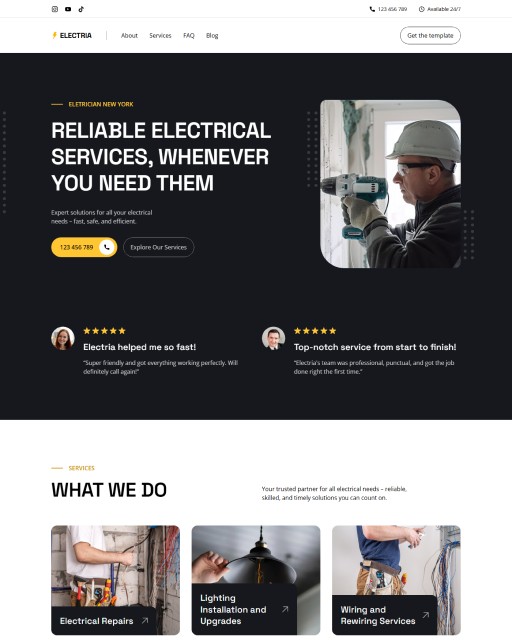
Home — Your primary conversion page. Hero with a clear headline, location, and CTA (“Get a free quote”). Social proof immediately below — star rating, number of jobs completed, years in business. Brief service overview. Testimonials. Contact form.
About — Not just a bio. Your about page should answer the questions clients actually have: Are you licensed? How long have you been trading? What’s your service area? A team photo and a short paragraph about your business builds the human connection that makes people comfortable calling.
Services — One page listing all your services with enough detail to be useful — not just service names. For each service, include: what it involves, who needs it, and a CTA to enquire. Services that have dedicated detail pages will also help your local SEO.
Service Detail pages — Individual pages for your highest-value services: consumer unit upgrades, EV charger installation, rewiring, fault finding, commercial work. Each page can rank independently for local searches like “EV charger installation [city]” — this is where serious SEO leverage comes from.
Testimonials — Dedicated testimonials work harder than three quotes buried in a homepage. A page of real reviews with names, locations, and job descriptions builds the kind of credibility that converts hesitant clients.
FAQ — Answer the questions clients ask before calling: How much does it cost? Are you Part P certified? How quickly can you come out? Do you offer emergency call-outs? An FAQ page removes friction and reduces time spent on pre-quote enquiries.
Blog — Covered in the next section. Worth its own page from day one.
Contact — One form. Name, email, phone, message, and a service type selector so enquiries come in pre-sorted. Include your phone number in large text — many visitors won’t fill in a form, they’ll just call.
What to Write in Each Section
Knowing which sections to include is step one. Knowing what to write in them is where most electricians get stuck.
Hero headline formula: Location + service + outcome. “Qualified electrician in [city] — fast, safe, guaranteed.” It’s direct, it’s local, and it immediately answers the three questions a client is asking: Can this person help me? Are they near me? Can I trust them?
Services: Write for someone who doesn’t know your trade. “Consumer unit upgrade” means nothing to most homeowners. “Consumer unit upgrade — replace your old fuse box with a modern unit that meets current safety standards” means something. Add a starting price or at least a price range — clients who can’t find pricing will call your competitors who do show it.
Testimonials: Specific results beat vague praise every time. “Great electrician, really professional” is forgettable. “Josh rewired our whole house in two days, no mess, passed inspection first time” is convincing. When asking clients for reviews, prompt them with: what was the job, how did it go, and would you recommend us?
About page: Lead with your credentials — Part P certification, NAPIT or NICEIC registration — then your story. Where you’re based, how long you’ve been trading, what types of work you specialise in. A human-sounding paragraph outperforms a bulleted credential list.
Why Local SEO Starts With Your Blog
Most electricians ignore the blog. That’s an opportunity.
When someone’s consumer unit trips repeatedly, they Google it. When someone is buying an electric vehicle, they search “EV charger installation cost.” When someone moves into a house with old wiring, they look up “when does a house need rewiring.” These are your clients, searching before they’re ready to call — and the electrician whose website answers those questions is the one who gets the call when they are ready.
You don’t need to post every week. Four to six posts a year, targeting the questions your clients actually ask, builds local authority over twelve to eighteen months. Topics worth writing about:
“How much does a consumer unit upgrade cost in [city]?”
“Do I need an electrician to install an EV charger?”
“How to tell if your home needs rewiring”
“What is Part P and why does it matter?”
“What to check before buying a house — electrical safety guide”
Write the way you’d explain it to a client on the phone. That tone performs better than polished marketing copy, and it’s faster to produce.
How to Launch Your Electrician Website Without a Developer
A custom website for a trades business typically costs £2,000–£6,000 and takes four to eight weeks to deliver. For most independent electricians and small electrical contractors, that’s money and time better spent elsewhere.
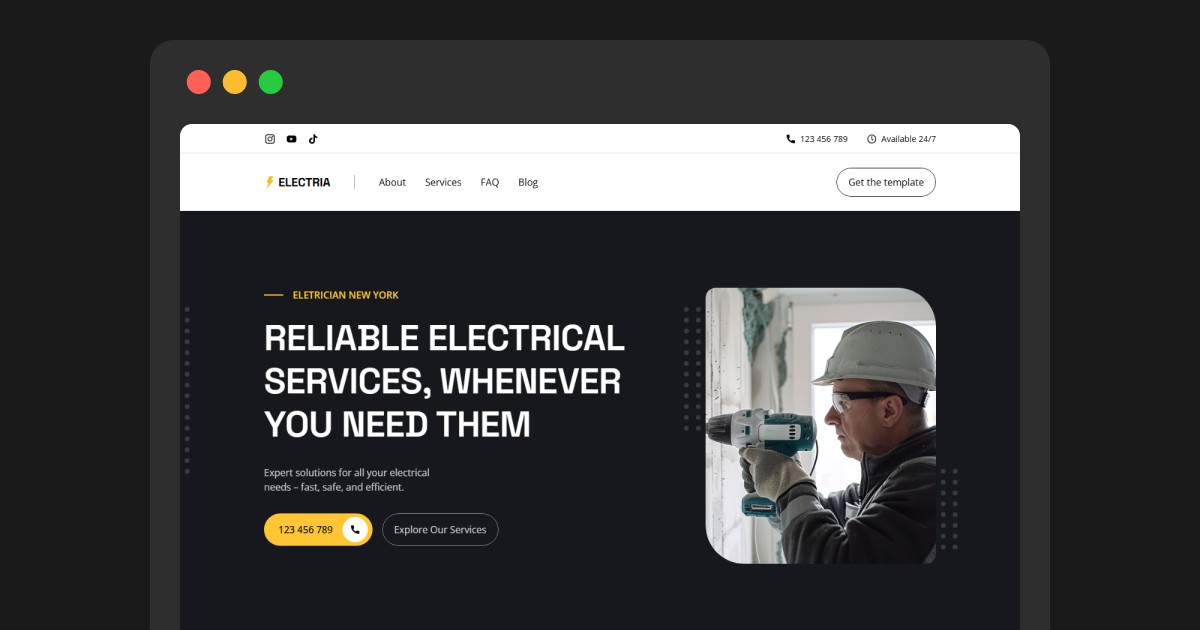
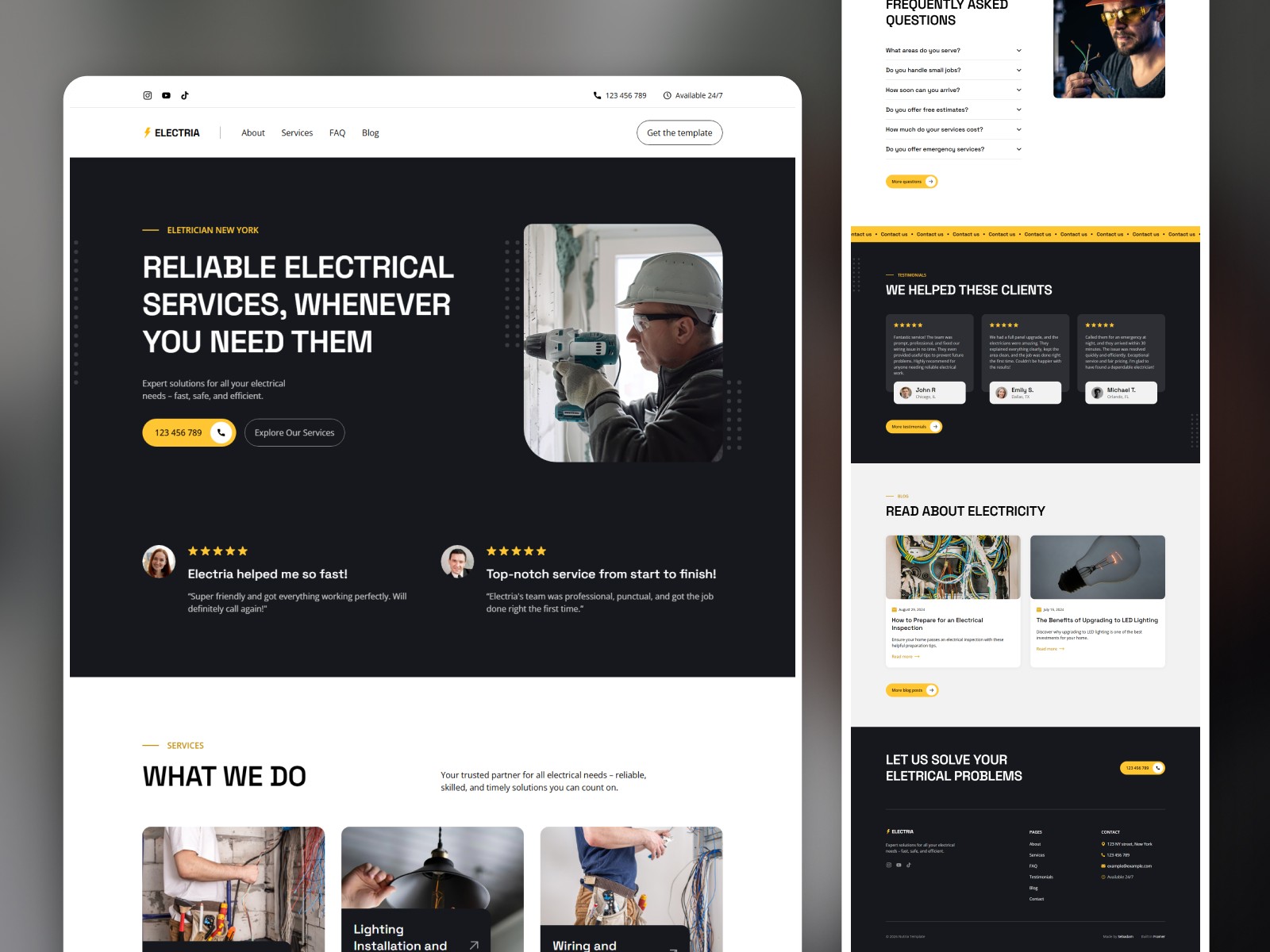
A Framer template built specifically for electricians gives you the same professional structure — home, about, services, testimonials, FAQ, blog, contact — without the cost or the wait. You customize everything directly in Framer’s visual editor, connect your domain, and you’re live. Most electricians are up and running in under 24 hours.
Electria is a premium Framer template built specifically for electricians and electrical contractors. It includes 10 fully designed pages, 5 CMS collections for managing services, blog, team, testimonials, and FAQ, and a dark high-contrast design with yellow accents that positions your business as professional and credible from the first impression. Every template purchase includes setup tutorials that walk you through launch step by step.
Want to compare options before you pick one? Our shortlist of the 3 best Framer templates for electricians puts Electria next to two alternatives, including a free one.
Frequently asked questions
What pages does an electrician website need?
At minimum: home, about, services, testimonials, FAQ, and contact. Add dedicated service detail pages for your highest-value work — consumer units, EV chargers, rewiring — and a blog for local SEO. The more structured your service pages, the better your site will rank for specific local searches.
How do I get my electrician website to show up on Google?
Start with the basics: your business name, location, and service area clearly stated on every page. Add a blog targeting questions local clients search for. Build separate pages for each major service so Google can rank you for specific terms. Register on Google Business Profile and keep it updated — this is the fastest route to local visibility.
Do I need a developer to build an electrician website?
No. Framer templates give you a fully designed, professional site you can customize and publish yourself. You update the text, swap the images, connect your domain, and you're live — no coding required. Most electricians using a template like Electria are live within 24 hours.
How much does an electrician website cost?
A custom developer-built website costs £2,000–£6,000 and takes weeks. A premium Framer template like Electria costs $79 plus Framer hosting from $15/month — and you can launch in under 24 hours. For most independent electricians, the template route delivers the same professional result at a fraction of the cost.


