How to Build a Pest Control Website That Books More Jobs
A homeowner who just found a wasp nest calls whoever looks fastest and most trustworthy. Here's the pest control website structure that wins that call — urgency, trust, per-pest services, and how to launch without a developer.

8
min read
















Most pest control websites are brochures. Here's the structure that actually books jobs — urgency above the fold, trust signals, per-pest services, why local SEO starts with your blog, and how to launch without a developer.
A pest control website that books jobs does three things: it makes clear you can come today, it stacks trust signals — licenses, reviews, guarantees — above the fold, and it makes calling or booking effortless. Most pest control websites do none of these. A homeowner who just found a wasp nest or a mouse in the kitchen is stressed and comparing three companies at once — and the one that looks fastest and most trustworthy in five seconds gets the call.
I build Framer templates at sebadam.supply, and I’ve studied what turns a pest control website from a brochure into a booking machine. This guide covers the exact structure — the pages you need, what goes in each, and how to launch without a developer.
Why Most Pest Control Websites Don’t Book Jobs
Before fixing the structure, it helps to see what goes wrong. Most pest control websites fail for the same reasons:
There’s no urgency signal. Pest problems are emergencies. If your homepage doesn’t say “same-day,” “24/7,” or “emergency call-outs” above the fold, you lose the urgent, high-intent visitor to the company that does.
There’s no trust above the fold. You’re asking a homeowner to let a stranger into their home and spray chemicals near their family and pets. Licenses, insurance, certifications, reviews, and a guarantee are the deciding factors — not the design — and hiding them leaves your biggest lever untouched.
Services are a vague list. “Residential, commercial, industrial” tells a worried customer nothing. Someone searching for bed bug treatment wants to know you handle exactly their pest, how the process works, and whether it’s safe for pets and children.
The call and booking path is buried. The phone number should be large and clickable on every screen, and a booking form is the single most important element on the page. Most sites make people hunt for it.
The Pages Your Pest Control Website Needs
You don’t need twenty pages. But a single homepage isn’t enough for a business with multiple services and a real need to build trust fast. Here’s the core structure:
Home — Your primary conversion page. Urgency hero with a large phone number and a “Book same-day” CTA. Trust signals immediately below — licensed, insured, star rating, years in business, guarantee. Brief service overview, reviews, and a booking prompt.
About — Not a mission statement. Answer what customers actually want to know: are you licensed and insured, how long you’ve been trading, whether you’re local, and who’s coming to their door. A team photo and a guarantee build the trust that gets the call.
Services — One page listing every pest and treatment with enough detail to be useful — general pest control, rodents, termites, bed bugs, wasps, cockroaches, ants. For each: what it involves, whether it’s safe for pets, and a CTA to book.
Service detail pages — Individual pages for your highest-value treatments: termite treatment, bed bug removal, rodent control, wasp nest removal. Each can rank independently for local searches like “termite treatment [city]” — this is where the serious SEO leverage lives.
Reviews / testimonials — Real reviews with names, locations, and the pest solved. In a trust business, this is what converts a hesitant homeowner.
FAQ — Answer what customers ask before calling: Is it safe for pets and children? How soon can you come out? Do you guarantee the work? How much does it cost?
Blog — Covered below. Worth its own page from day one for local SEO.
Contact / Book — A simple booking form, a big clickable phone number, and your service area. Many visitors won’t fill in a form — they’ll call — so make the number impossible to miss.
What to Write in Each Section
Knowing the sections is step one. Knowing what to write is where most pest control businesses get stuck.
Hero formula: pest + location + speed. “Same-day pest control in [city] — licensed, insured, guaranteed.” It’s direct, local, and answers the three questions a panicked customer is asking: Can you fix my problem? Are you near me? Can I trust you today?
Services: write for a stressed homeowner, not another exterminator. “Bed bug treatment — discreet, same-day inspection, heat and chemical options, safe for pets” means something. “Bed bugs” does not.
Reviews: specific pest plus fast response beats vague praise. “They came out within two hours and the ants were gone by the weekend” is far more convincing than “great service.”
About: lead with your credentials — state pest control license, insurance, certifications — then your local story and your guarantee.
Trust, Safety, and Urgency Win the Job
Pest control is different from most industries: the buyer is stressed, the job is urgent, and it happens inside their home. Three things matter more here than almost anywhere else.
Urgency. A pest problem is an emergency. “Same-day service,” “24/7 emergency call-outs,” and “we can be there today” convert the panicked searcher who’s comparing three companies right now.
Trust. Stack every credibility signal: state license, insurance, certifications, a clear guarantee (“gone, or we come back free”), verified reviews, and years in business.
Safety. Say it plainly where it’s true — “safe for pets and children,” “eco-friendly options.” It’s the reassurance that turns a hesitant parent into a booking.
Why Local SEO Starts With Your Blog
Most pest control businesses ignore the blog. That’s an opportunity.
When someone spots droppings, they Google “how to get rid of mice in the house.” When someone’s bitten in the night, they search “signs of bed bugs.” When someone finds a nest, they look up “are wasp nests dangerous.” These are your customers, searching before they’re ready to call — and the company whose website answers those questions is the one that gets the call when they are.
You don’t need to post every week. Four to eight posts a year, targeting the questions your customers actually ask, builds local authority over twelve to eighteen months. Topics worth writing about:
“How to get rid of mice in your house”
“Signs of a termite infestation to watch for”
“How much does bed bug treatment cost in [city]?”
“Are wasp nests dangerous — and when to call a professional”
“Is pest control safe for pets and children?”
Write the way you’d explain it to a customer at their door. That tone performs better than polished marketing copy, and it’s faster to produce.
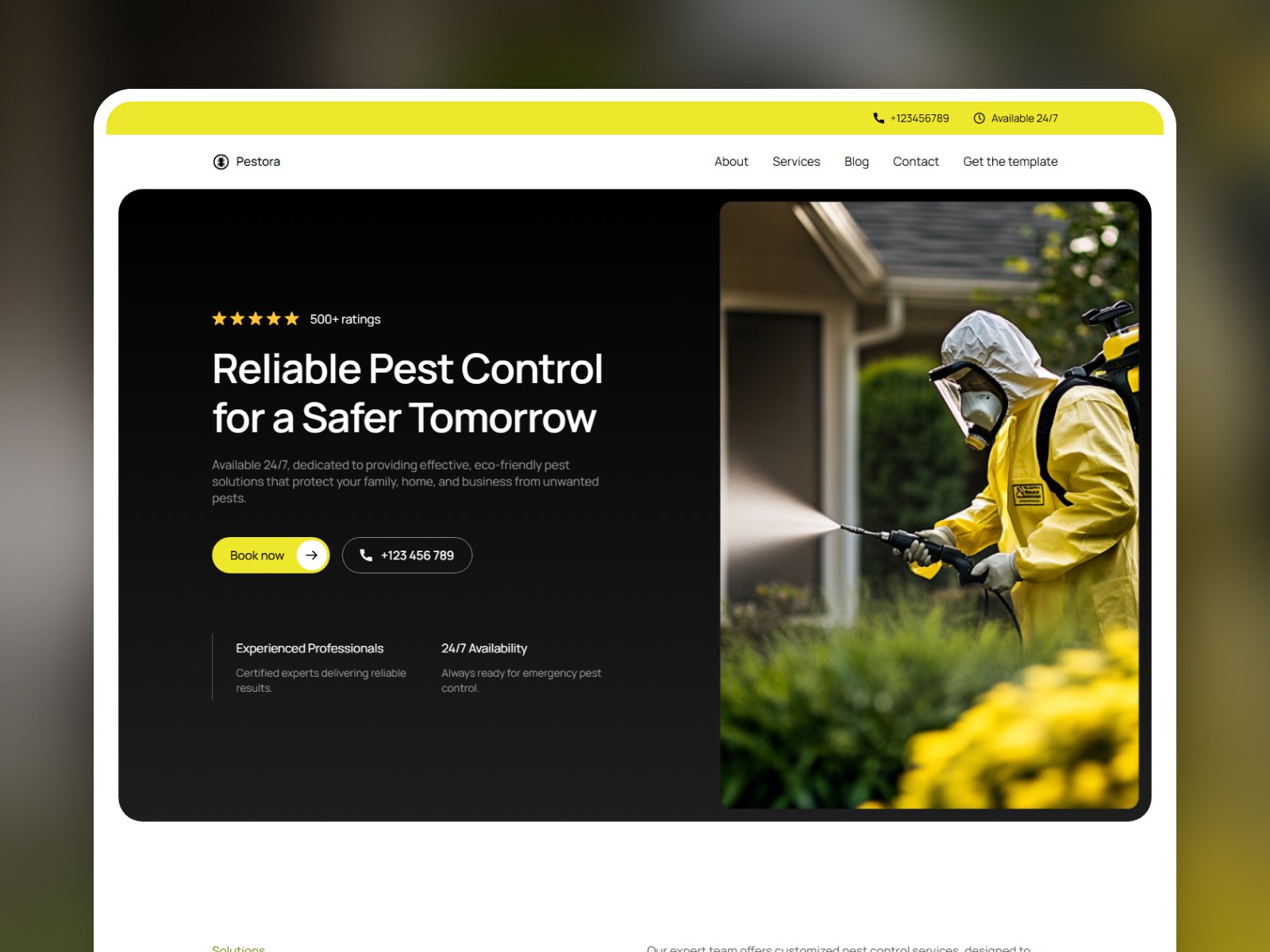
How to Launch Your Pest Control Website Without a Developer
A custom pest control website typically costs $2,000–$6,000 and takes weeks to deliver. For most pest control companies, that’s money and time better spent on trucks, gear, and crews.
A Framer template built for pest control gives you the same professional structure — home, about, services, reviews, FAQ, blog, contact — without the cost or the wait. You customise everything in Framer’s visual editor, connect your domain, and you’re live. Most companies are up and running in under 24 hours.
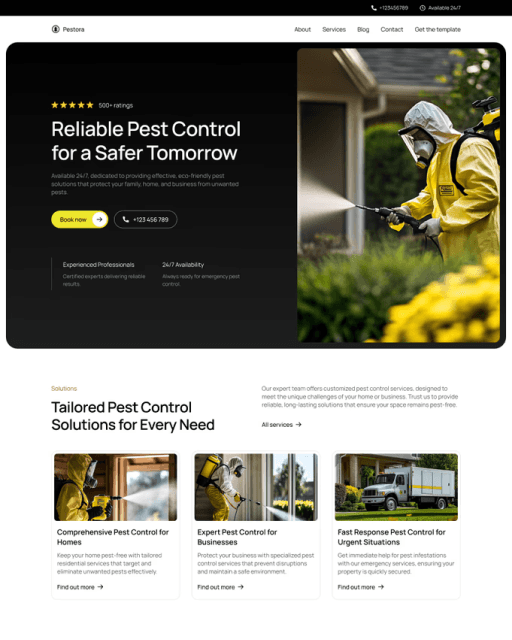
Pestora is a premium Framer template built specifically for pest control companies and exterminators. It includes 8 pages, 5 CMS collections so you can manage your services and blog without code, and a 24/7-focused design built to turn urgent visitors into booked appointments. If you want to compare options first, see our roundup of the best Framer templates for pest control.
Want to compare options before you pick one? Our shortlist of the 5 best Framer templates for pest control compares Pestora with four alternatives, from a free starter site to premium commercial templates.
Frequently asked questions
What pages does a pest control website need?
At minimum: home, about, a services page, service detail pages for your key treatments (termites, bed bugs, rodents), reviews, an FAQ, a blog, and a contact/booking page with a prominent phone number. Dedicated service detail pages help local SEO the most.
How much does a pest control website cost?
A custom pest control website usually costs $2,000–$6,000 and takes weeks to build. A Framer template gives you the same professional structure for free up to around $129, and you can launch in under 24 hours without a developer. Pestora is a premium option built for pest control.
What makes a pest control website convert?
Urgency (“same-day,” “24/7”), trust above the fold (licenses, insurance, reviews, and a guarantee), clear per-pest services with a note on pet and child safety, and an effortless call-or-book path with a large clickable phone number.
Do I need to know how to code to build a pest control website?
No. With a Framer template you edit text, images, services, and colours directly in the visual editor — no code. You add your content, connect a domain, and publish. Most pest control companies go live in under 24 hours.


